

Shopify has made it easy for starting businesses to build an e-commerce website and many businesses have been using it. It is a great tool to get started with little to knowledge of programming and design needed. More recently the world has developed a strong interest in blockchain and the possibilities of cryptocurrencies. Open Bazaar is a peer-to-peer marketplace where there is no regulation of what can be sold or not whereas Shopify might step in when someone is trying to sell some controversial items. Other than Shopify, Open Bazaar also doesn’t charge a fee to sell or buy using their platform.
When trying to create a marketplace in each of these two platforms, I found that both seem to offer limited customization to brand yourself. It was my first time testing either one.
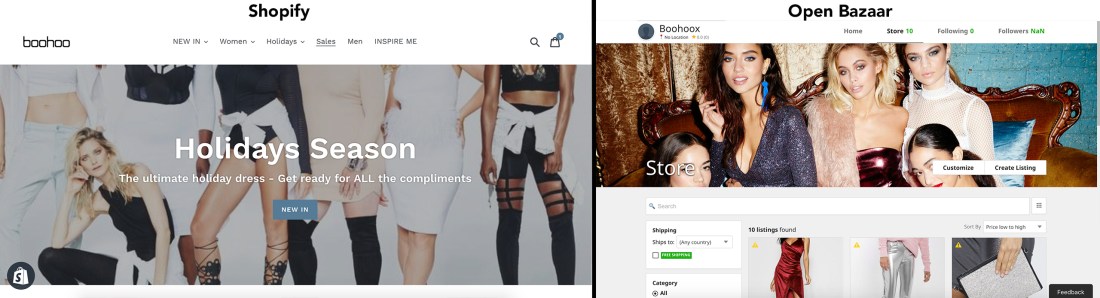 When you first open the store page, on Shopify you can select different themes while on Open Bazaar you don’t really change much but add products and personalize with the header image.
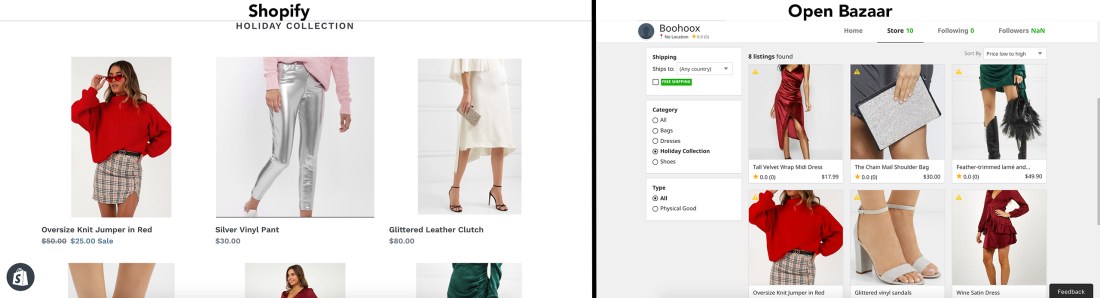 The store design of Open Bazaar reminds me more of Etsy rather than a more professional looking e-commerce website. In that regard I do prefer what is possible with Shopify’s designs. It looks more clean and professional.
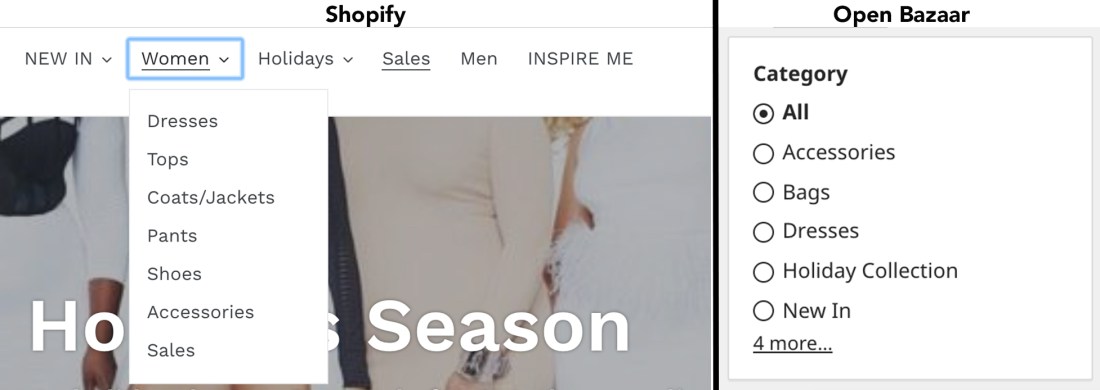 The navigation menu is very easy to set up in Shopify and it looks clean with drop down menus. The navigation menu in Open Bazaar on the other hand is more simple. It is alphabetically ordered, which I think should be optional. Also, every category will appear and you can’t make some of them subcategories.
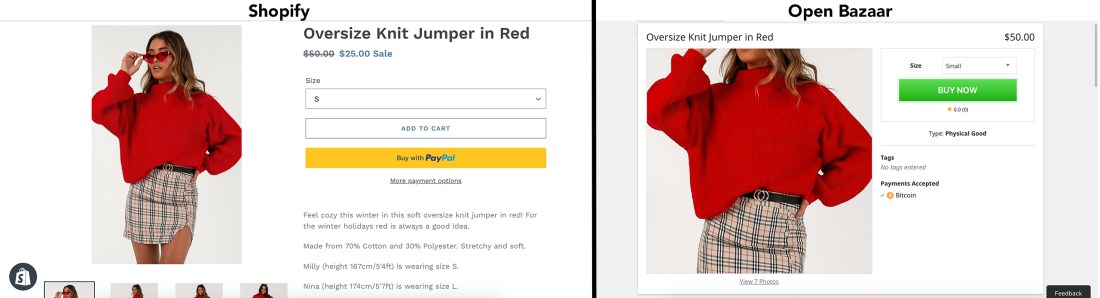 In both, Shopify and Open Bazaar, I was disappointed with the fact that I wasn’t able to change the layout and colors of buttons for the product page. Also, they only allow pictures to be added, no videos. I find it very unfortunate since videos of products can be so beneficial. I also think it would be better to have ability to go through pictures in Open Bazaar from the first picture that appears and not having to scroll lower to another section.
Trying to recreate the Shopify store on Open Bazaar, I realized that there was no blog feature. You can connect your social platforms but what if you wanted to have a blog with style tips for example? Now, for some companies this is not a concern but some industries could benefit from a blog section.
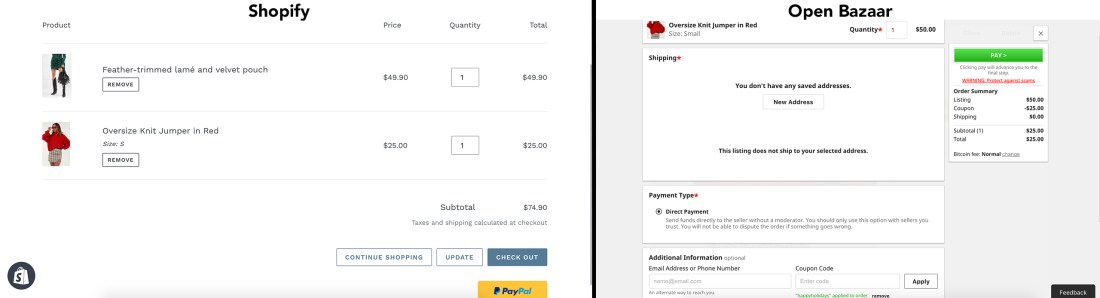 Another thing that was missing in Open Bazaar was a sale option. In Shopify you can add a previews and new price to imply sale that is shown in the product list page and product page. In Open Bazaar there is an option to add a coupon code but I wasn’t able to actually see it anywhere. The customer has to enter the promo code at checkout but how would he know that there is a coupon? You could publish it on your social platforms or add it to the header image if it is a general discount code for the holidays for example. You could also add the code into the description of each product. If you wanted different items at different discount rates, it would make it difficult and confusing.
Also, in Open Bazaar I added one item to the cart by clicking “BUY NOW” and was not able to close and add an additional item. This seems like it is not suitable right now for businesses where customers often buy more than one item.
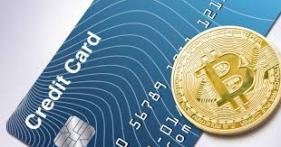 Payment is also something where it gets a little difficult with Open Bazaar as they use cryptocurrencies, which are not widely in circulation. Yes, there are a lot of Bitcoins for example out there but it not a common thing for consumers to have. Most people pay online with their credit cards or with PayPal, which works on Shopify.
Nevertheless, Open Bazaar is easier to set up right now because of all of these things. You don’t have to worry about setting up a navigation menu or home page. It is very easy to simply add products to the store. Also, they seem to have a chat function that comes up when you look at another store. But both platforms will give you the basic abilities for e-commerce and are fairly simple.
 For now, I like Shopify better in terms of aesthetics because I feel like businesses can customize it a bit easier and create a layout that they want to display. Also, the blog section is a major part that I would want to incorporate in order to keep getting long form content up on the site, receive comments from buyers and with that, be in a dialogue with them.
However, I do think that Open Bazaar could be the new Shopify – if they can do some changes. It hasn’t been out as long so it would be wrong to think that this is the best they can do. I also think that Open Bazaar and Shopify simply serve different people and businesses. If you just want to build an e-commerce website with nice aesthetics, Shopify is better. Most fashion companies for example will care about the look of their e-commerce site. But for others there are other things in the back end to consider.
 Depending on the kind of industry your in and products you sell, Open Bazaar might be a lot better for you. Open Bazaar is decentralized and non regulating. For example pharmaceutical companies (mostly indirectly) have to follow HIPAA and the privacy rule, which protects personal health information and medical records. If they want to sell products online, they would benefit from using Open Bazaar as the data collected would not belong to Open Bazaar. On Shopify, data collected is stored on Shopify and third parties can much easier get access to them. Therefore I would choose Open Bazaar for companies that want to keep their customer’s data more confidential and secure.
On the other hand, the privacy that Open Bazaar offers also means that it is harder for the government to go after scams or illegal trades. The use of cryptocurrencies also makes it impossible to track at the moment where the money comes from and goes. But this has to be figured out for everything Blockchain and cryptocurrency related.
Overall, I think there is a different use and need for each of the platforms. Businesses that are considering Open Bazaar I would assume want it for the back end features, not the design and style. And if you are interested in the benefits of Open Bazaar, you won’t go for Shopify even if it prettier because it is not offering the same in that regard.

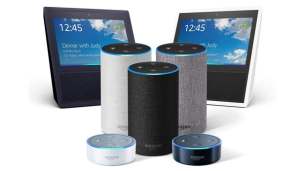 “Alexa, what is the weather today?” or “Siri, how long will it take me to get to work today?” are common things we hear today. Now 16% (39 million) of Americans own a smart speaker and 500 million users use Siri. Isn’t that crazy? It has spread like wildfire and will likely become more and more common worldwide.
 For consumers this opens new possibilities in terms of letting people in while they’re gone, checking on who is outside from their phone, changing and setting up lights to go at a specific time, etc. It also however, comes with security risks since all those smart devices are usually connected to WiFi. It is based on the assumption that users have a strong WiFi key. There was an incident with Phillips smart lights and also another app for home locks called Nest, where remote control was unavailable to users for some time.
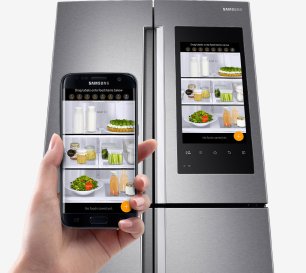 On the other hand, it can also help in the future to have more smart applications in the home. As an example, a smart fridge might be able to tell if your milk is spoiled, you’re running out of coffee and order it automatically to be delivered to your doorstep the next day. Further, a smart toilet might be able to realize and tell you if you are getting sick or should see a doctor. While this might sound like too much information, it can also be helpful for doctors and scientists as they might find out early signs of diseases that they never knew were connected to that disease. And with that maybe some illnesses can be prevented or treated earlier.
 There is a project called Hudson Yards in New York that is all about building smart homes as well as a shopping mall in the city. It would be the perfect place to test all of these ideas. However, if you move in there you do have to give up your rights to the data and let them have it in order to get the amenities of the building. This might seem intruding but I am sure there are a lot of people who don’t mind it and want to have a smart home.
 I think it is important for an entrepreneur to hear and learn about other entrepreneurs and success stories as well as failed business ideas. Personally, I like listening to
  How I Build This
 Also, for most businesses you will have to do tests for figuring out the best way to get traffic to your site. It will likely take
 However, the problem with new technologies, especially when it comes to sharing information and making transactions, is that there are no laws or regulations for it for a long time. Even for the internet, most laws that regulate physical businesses don’t actually touch online businesses but are rather extended and tried to be interpreted in that context.
 Also, the value of one Bitcoin fluctuates a lot. The value is not based on a company’s revenue, CEO or anything affecting stock prices but is solely based on consumer sentiment. If people trust the currency and think it will be valuable more later, the price of one bitcoin goes up. If there is a lot of fluctuations, people can sure buy and sell Bitcoins like a stock but it is so unreliable because it is not based on news etc. It seems like it is an investment more so than a currency because we can’t really use it in real life if it fluctuates this much. If we buy real world products or services with it, someone might get screwed over by the same amount of Bitcoin not being worth as much the next day as it was when the transaction occurred. Further, a small amount of people might own a big part of all the Bitcoins available, which means that they can influence and manipulate their value easily.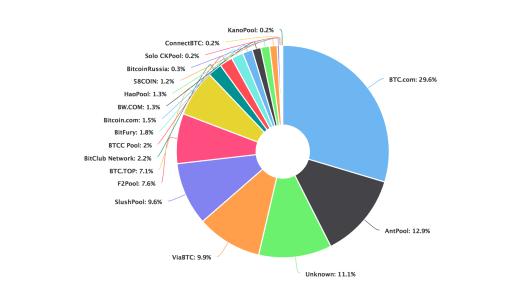

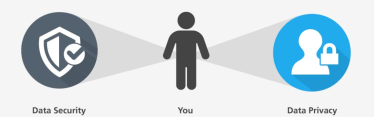 Security and control are one of the most important components for any business but especially e-commerce when customers are making transactions online. If we want to buy something from an online store, we want our information to be secure and prevent it from being stolen by hackers. Sellers want the same kind of security. Both, sellers and buyers always want control over their information as well as have transparency when it comes to figuring out where something went wrong in the buying/selling process.
 The newest development in this industry has been Blockchain, which is a digital ledger in which transactions are made and recorded publicly. With it we can secure anonymity, stop the threat of hackers, transparency and give consumers back their control over their identity.
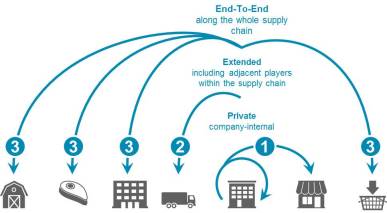 The whole buying process can be made transparent and with that more efficient. If every company used Blockchain in their supply chain, they could identify faults and errors from the very start of the process and make changes accordingly. Parts of the chain and even specific departments can be held accountable when there are certain problems that are reoccurring like theft or breakage.
 In contrast to other generations, Millennials have grown up with the notion of all kinds of equality (for the most part) – meaning that they expect equality for race, sex, gender, religion and a lot more. They have strong opinions and have the idea that they can help the world. We want a world of equality of human rights.
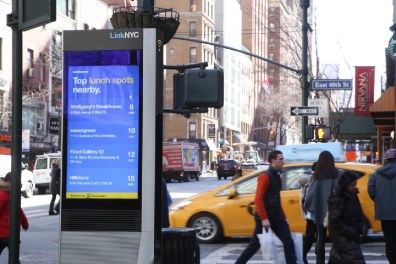 Nowadays, there are also a lot of public WiFi networks at Starbucks and other coffee shops, at airports, and in New York even on the street with LinkNYC kiosks. These are great ways for people who are on the go, tourists and people that might not have a data plan for their phones or even have Internet at home to have access and retrieve information they need.
 Why do carriers lobby for this? Of course for the money! If they can get net neutrality to be removed, they can charge extra for those specific apps and sites and whatever they want. They can slow down the Internet speed for them tremendously and ask a higher price to access them. And there would be no limit for them. What people also have to realize is that not only can they charge much more, but they can literally control the Internet and its content.
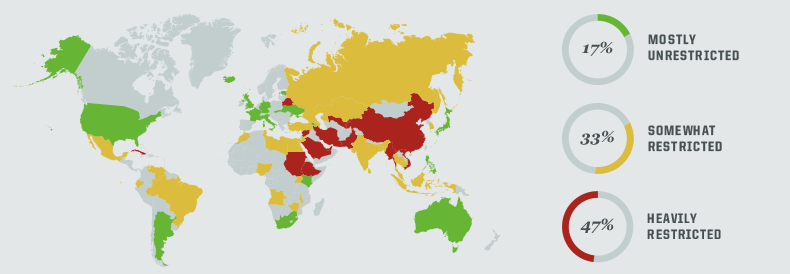 We know that China has a huge censorship online, not allowing their people to use big giants like Google, Youtube and Facebook. And most of the world agrees that it is wrong and bad because people then can’t get the same information, news and connections as the rest of the world and also their world view is skewed by only seeing what the government wants them to see.
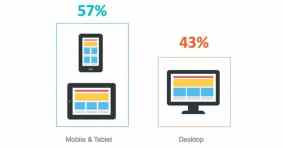 Browsing through the web on a mobile phone has become a daily habit for most people. When you’re on the train or just talking to people and want to find out about a topic, share a news story you read before, refer to a movie or actor, or just convert metrics or translate while you’re in a different country. Mobile traffic makes up 57% of all the web traffic and the trends will increase every year.
 Google actually pays attention to words but also phrases (possible long tail keywords you want to rank for anyways) you use when talking about a specific topic. The more of the phrases that it considers relevant, the higher value you give in it’s eyes. That is why often the first spot on Google for a keyword is the longest article and the further down the list you go the shorter the articles. Again, of course just babbling on about random things won’t help, it has to be relevant.
 Just remember that Millennials and generation Z are going to be the new majority of consumers in no time. Millennials use 4.5 devices on average to connect with brands, which tells you that likely only one of those is a Laptop or PC. To establish authority in your industry you should tailor a well designed message to each of the devices and platforms that your target audience is going to connect with your brand. And of course everyone nowadays searches for a company or product before buying it.
 You want to own a bag from Chanel but can’t afford the retail price. So maybe you look for vintage, pre-owned ones that you can buy for cheaper. However, of course you want to make sure that it is a real Chanel bag and not a knock off. The question is how do you know for sure other than going into a Chanel store and ask after you have bought it?
 In high value industries it is even more important to clients that what they spend so much money on, is the real deal. ATO’s new vision for the art market is inspiring and while complicated to understand the idea of blockchain creating a market for artists, it is pushing into a new direction of authenticity and transparency.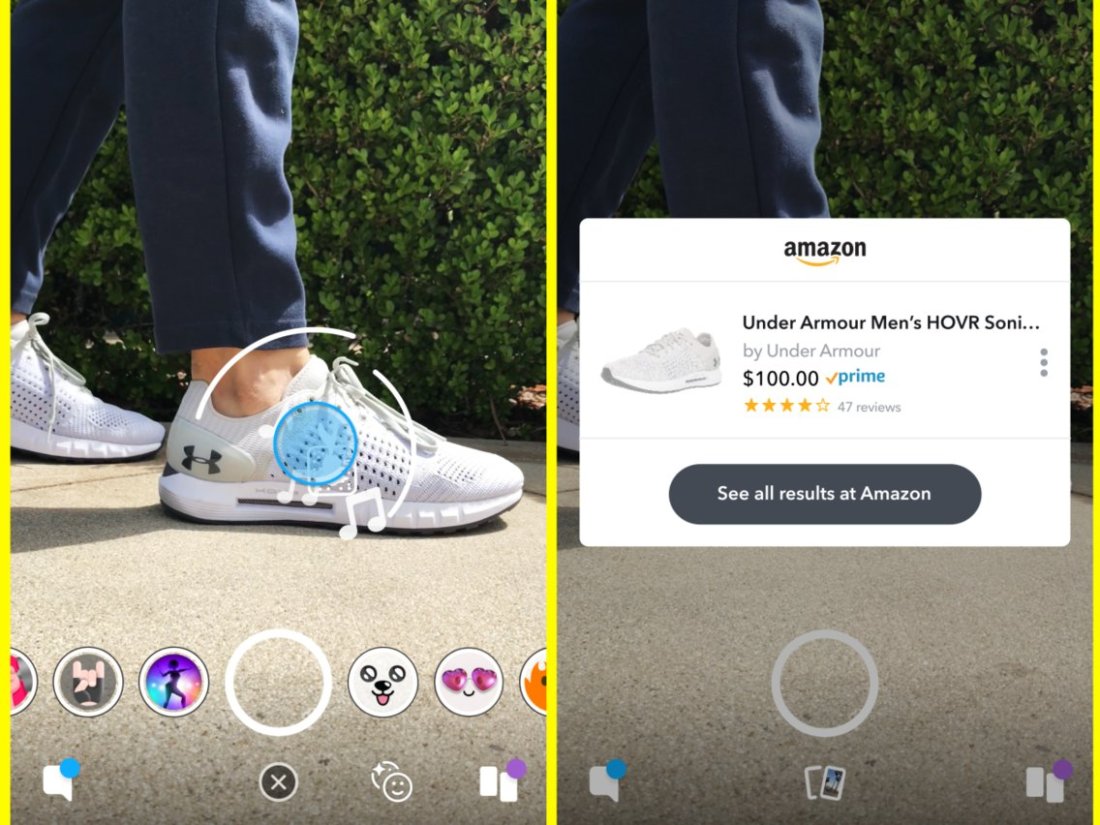

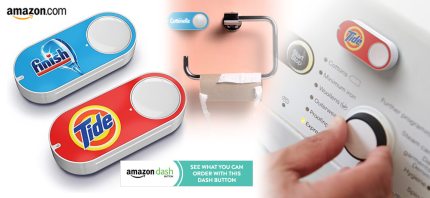 Further, Amazon offers subscriptions to make it easier for you to keep having essentials handy and they have something called Amazon Dash Buttons. Those are little fobs for different brands that you literally only need to click once and you have ordered the product the Dash Button is associated with. They already have over 150 Dash Buttons.


 BeeMarketing