

Shopify has made it easy for starting businesses to build an e-commerce website and many businesses have been using it. It is a great tool to get started with little to knowledge of programming and design needed. More recently the world has developed a strong interest in blockchain and the possibilities of cryptocurrencies. Open Bazaar is a peer-to-peer marketplace where there is no regulation of what can be sold or not whereas Shopify might step in when someone is trying to sell some controversial items. Other than Shopify, Open Bazaar also doesn’t charge a fee to sell or buy using their platform.
When trying to create a marketplace in each of these two platforms, I found that both seem to offer limited customization to brand yourself. It was my first time testing either one.
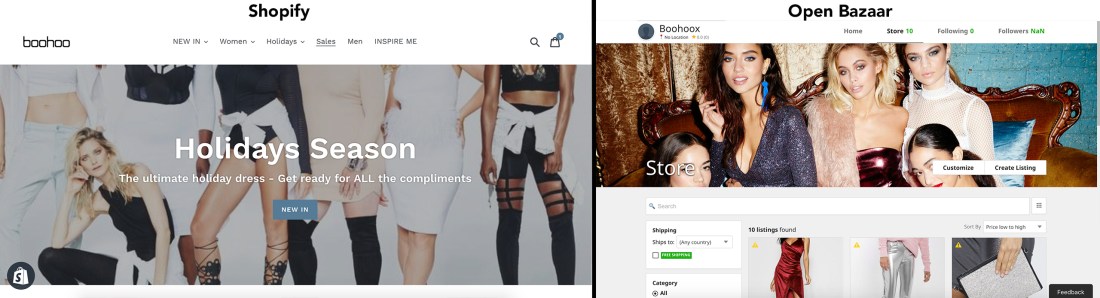 When you first open the store page, on Shopify you can select different themes while on Open Bazaar you don’t really change much but add products and personalize with the header image.
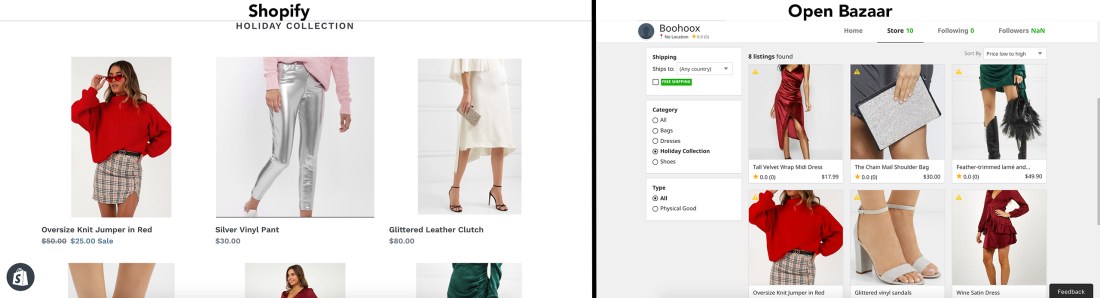 The store design of Open Bazaar reminds me more of Etsy rather than a more professional looking e-commerce website. In that regard I do prefer what is possible with Shopify’s designs. It looks more clean and professional.
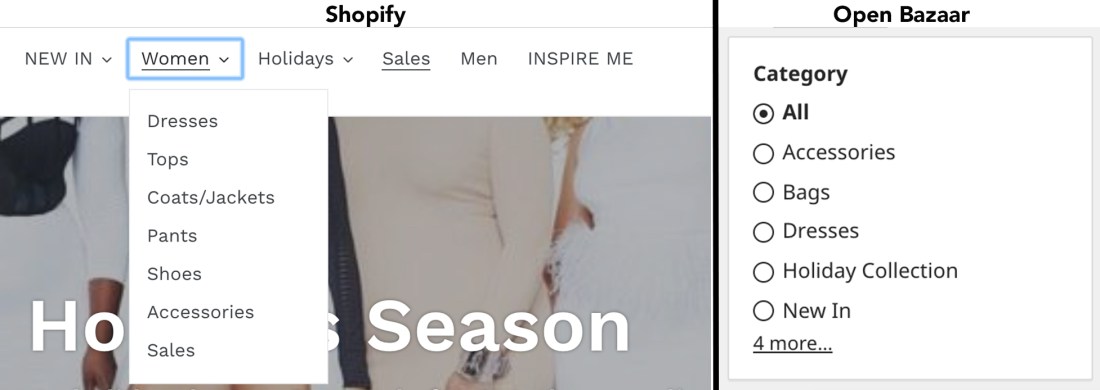 The navigation menu is very easy to set up in Shopify and it looks clean with drop down menus. The navigation menu in Open Bazaar on the other hand is more simple. It is alphabetically ordered, which I think should be optional. Also, every category will appear and you can’t make some of them subcategories.
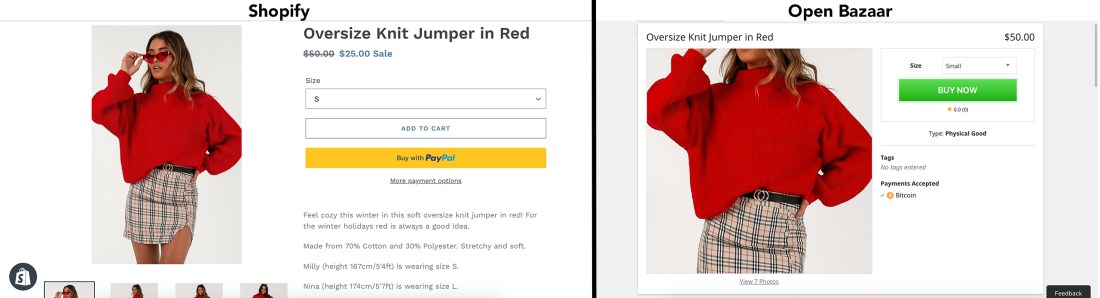 In both, Shopify and Open Bazaar, I was disappointed with the fact that I wasn’t able to change the layout and colors of buttons for the product page. Also, they only allow pictures to be added, no videos. I find it very unfortunate since videos of products can be so beneficial. I also think it would be better to have ability to go through pictures in Open Bazaar from the first picture that appears and not having to scroll lower to another section.
Trying to recreate the Shopify store on Open Bazaar, I realized that there was no blog feature. You can connect your social platforms but what if you wanted to have a blog with style tips for example? Now, for some companies this is not a concern but some industries could benefit from a blog section.
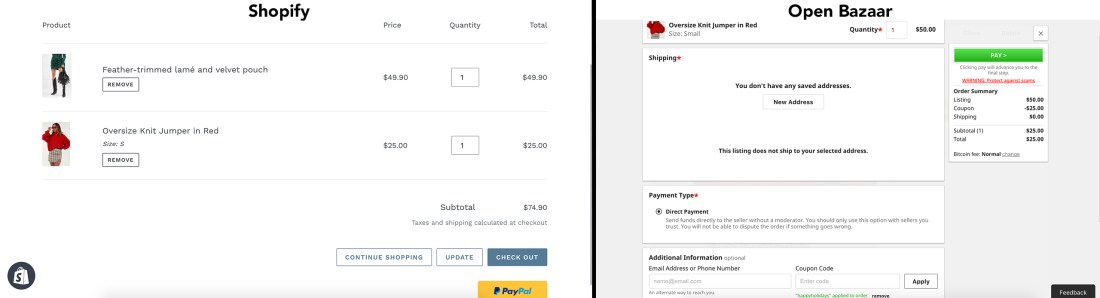 Another thing that was missing in Open Bazaar was a sale option. In Shopify you can add a previews and new price to imply sale that is shown in the product list page and product page. In Open Bazaar there is an option to add a coupon code but I wasn’t able to actually see it anywhere. The customer has to enter the promo code at checkout but how would he know that there is a coupon? You could publish it on your social platforms or add it to the header image if it is a general discount code for the holidays for example. You could also add the code into the description of each product. If you wanted different items at different discount rates, it would make it difficult and confusing.
Also, in Open Bazaar I added one item to the cart by clicking “BUY NOW” and was not able to close and add an additional item. This seems like it is not suitable right now for businesses where customers often buy more than one item.
 Payment is also something where it gets a little difficult with Open Bazaar as they use cryptocurrencies, which are not widely in circulation. Yes, there are a lot of Bitcoins for example out there but it not a common thing for consumers to have. Most people pay online with their credit cards or with PayPal, which works on Shopify.
Nevertheless, Open Bazaar is easier to set up right now because of all of these things. You don’t have to worry about setting up a navigation menu or home page. It is very easy to simply add products to the store. Also, they seem to have a chat function that comes up when you look at another store. But both platforms will give you the basic abilities for e-commerce and are fairly simple.
 For now, I like Shopify better in terms of aesthetics because I feel like businesses can customize it a bit easier and create a layout that they want to display. Also, the blog section is a major part that I would want to incorporate in order to keep getting long form content up on the site, receive comments from buyers and with that, be in a dialogue with them.
However, I do think that Open Bazaar could be the new Shopify – if they can do some changes. It hasn’t been out as long so it would be wrong to think that this is the best they can do. I also think that Open Bazaar and Shopify simply serve different people and businesses. If you just want to build an e-commerce website with nice aesthetics, Shopify is better. Most fashion companies for example will care about the look of their e-commerce site. But for others there are other things in the back end to consider.
 Depending on the kind of industry your in and products you sell, Open Bazaar might be a lot better for you. Open Bazaar is decentralized and non regulating. For example pharmaceutical companies (mostly indirectly) have to follow HIPAA and the privacy rule, which protects personal health information and medical records. If they want to sell products online, they would benefit from using Open Bazaar as the data collected would not belong to Open Bazaar. On Shopify, data collected is stored on Shopify and third parties can much easier get access to them. Therefore I would choose Open Bazaar for companies that want to keep their customer’s data more confidential and secure.
On the other hand, the privacy that Open Bazaar offers also means that it is harder for the government to go after scams or illegal trades. The use of cryptocurrencies also makes it impossible to track at the moment where the money comes from and goes. But this has to be figured out for everything Blockchain and cryptocurrency related.
Overall, I think there is a different use and need for each of the platforms. Businesses that are considering Open Bazaar I would assume want it for the back end features, not the design and style. And if you are interested in the benefits of Open Bazaar, you won’t go for Shopify even if it prettier because it is not offering the same in that regard.

 BeeMarketing